
TDI-Brooks completes geotechnical projects offshore Alaska
TDI-Brooks completes geotechnical project in Cook Inlet
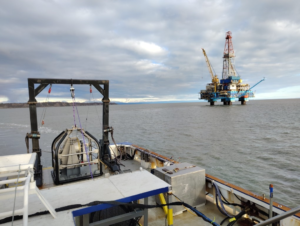
TDI-Brooks has completed a geotechnical project for the Cook Inlet LNG Project (CI LNG) in Cook Inlet, Alaska, providing its Neptune N5K cone penetration testing (CPT) system for an Anchor Site Characterization Study. The work supported project developer Cook Inlet LNG LLC, collecting subsurface soil data to inform anchor selection.
The study covered different locations within their project site with a scope of 16 CPTs in water depths ranging from 10 to 25 meters. Operations were conducted from the R/V Poseidon, a third-party vessel working in the region, demonstrating TDI-Brooks’ ability to deploy specialized geotechnical equipment aboard locally available vessels.
The Neptune N5K is part of TDI-Brooks’ range of portable toolkits available for deployment worldwide. These systems allow clients to pair regional vessel resources with TDI-Brooks’ equipment and technical expertise, providing flexible support for offshore site investigations and infrastructure projects.
TDI-Brooks completes geotechnical project offshore Alaska
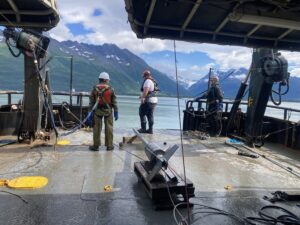
TDI-Brooks recently completed a third-party geotechnical project offshore Alaska, supporting a short cable route survey for Woolpert utilizing our Gravity CPT Stinger (gCPT) system. The project consisted of a geophysical and geotechnical survey for a marine cable route in the Valdez Arm.
Designed for rapid deployment in remote and challenging environments, the gCPT tool enables efficient in-situ soil characterization without the need for conventional drilling. The system transports a piezocone penetrometer (PCPT) to the seabed, where it captures high-resolution data from the mudline to depths of 5 meters and often exceeding 10 meters below mudline (BML).
Piezocone testing is a widely accepted method for offshore site investigations, providing continuous measurements such as tip resistance, sleeve friction, and pore pressure—key parameters used to evaluate soil strength and stratigraphy in real time.
For cable route engineering, these insights are critical in identifying:
➡️ Soil variability along the route
➡️ Burial feasibility and trenching conditions
➡️ Potential geohazards impacting installation
Operating in Alaska’s dynamic and often logistically complex offshore environment, this project highlights the value of portable, high-efficiency geotechnical solutions that can deliver actionable data quickly and safely.
TDI-Brooks continues to support offshore energy, telecom, and infrastructure developments worldwide with innovative seabed investigation technologies and experienced offshore teams.